The island of Milos
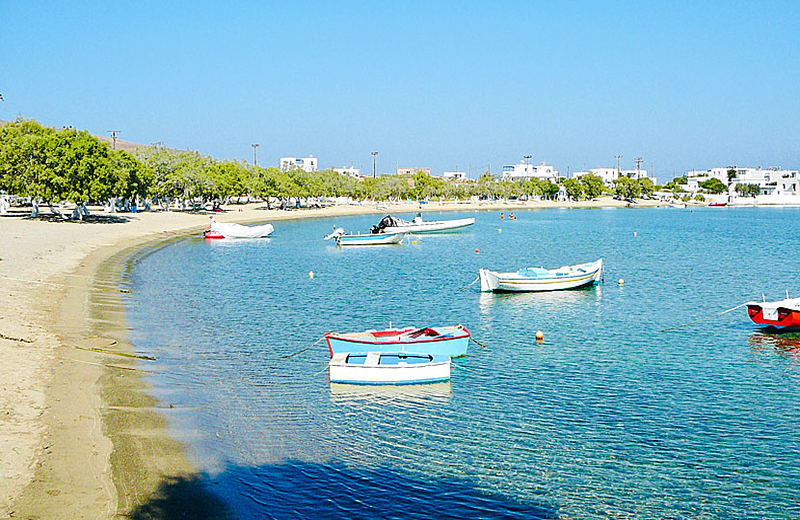
Milos is one of the volcanic Greek islands, sitting at the southernmost part of the Cyclades island complex. Thanks to its volcanic origin, Milos boasts a magnificent colorful landscape and a coastline that counts more than 40 exotic beaches.
The island can be reached by plane from Athens or ferry from by ferry from Piraeus and Lavrion ports in Athens and many other islands.
Being relatively close to famous Cyclades islands, such as Santorini, Mykonos, Paros and Naxos, Milos offers the perfect chance for island hopping!
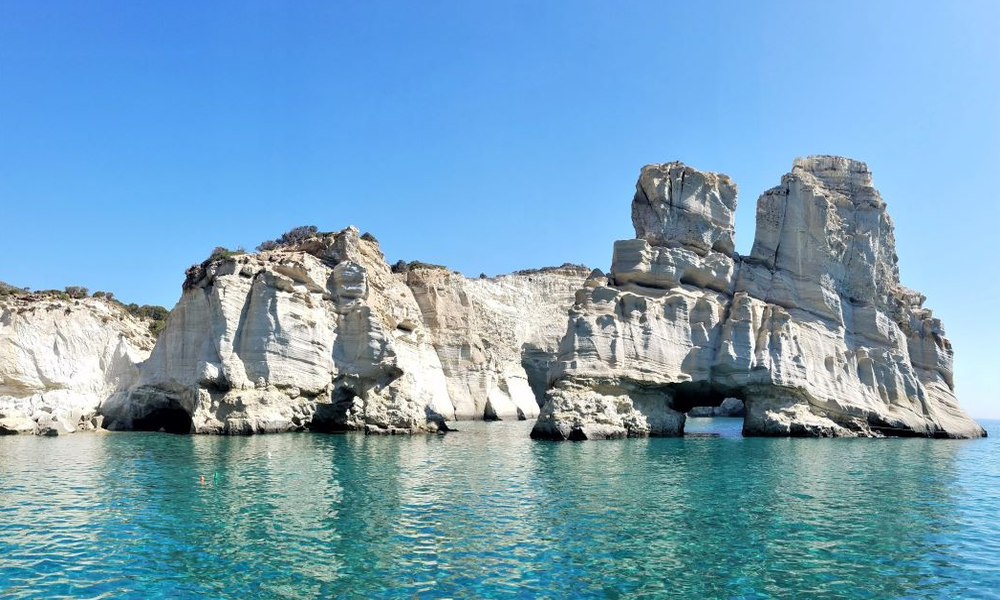
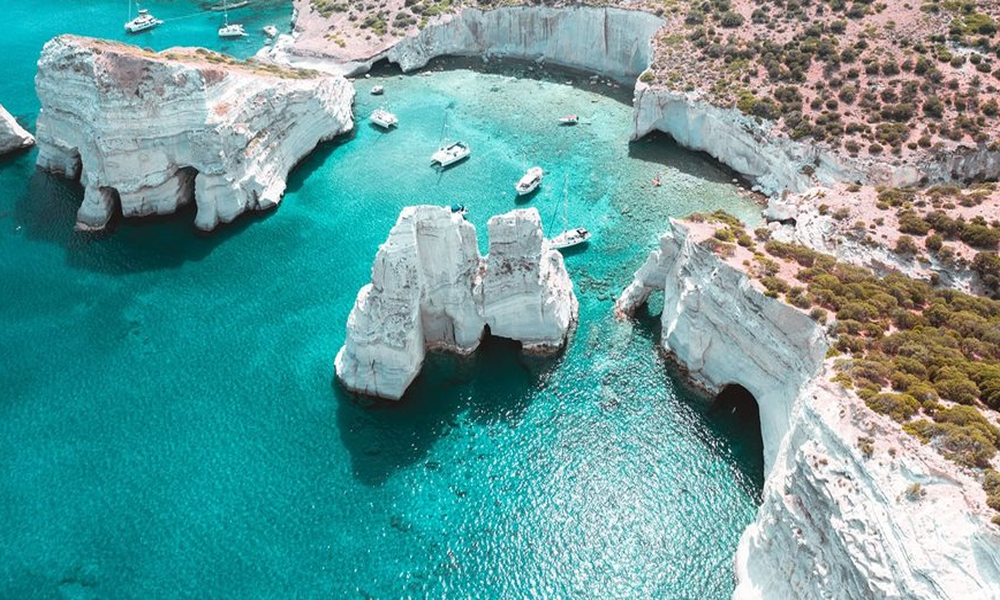
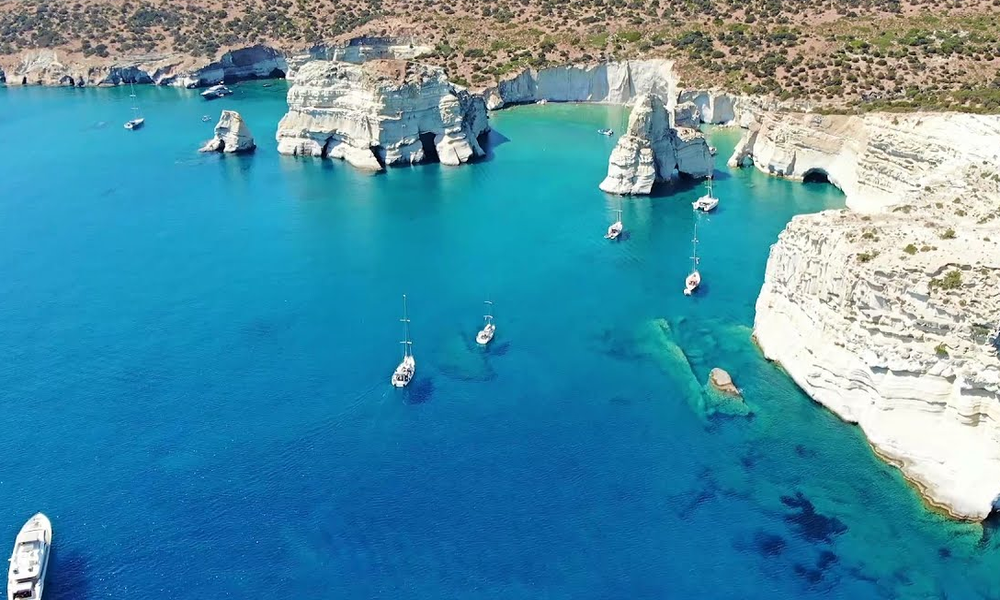
Milos volcanic past is reflected on the large number of hot springs, caves and geological formations found around the island such as Kanavas, Alykis, Provatas, Pikropigis springs, Papafragas and Sikia Caves, and Kleftiko Cove. The island also has numerous significant archaeological sites such as the early christian catacombs, the Bronze Age settlement of Phylakopi, and interesting museums namely the Mining Museum showcasing Milos’ 11.000 years old mineral history.
The island’s climate is mild Mediterranean, with adequate sunshine in the most days of the year. From the middle of July and until the middle of August the etesian winds blow (north periodic winds) and as for the south winds they are usually neither frequent nor strong.
SIGHTSEEING
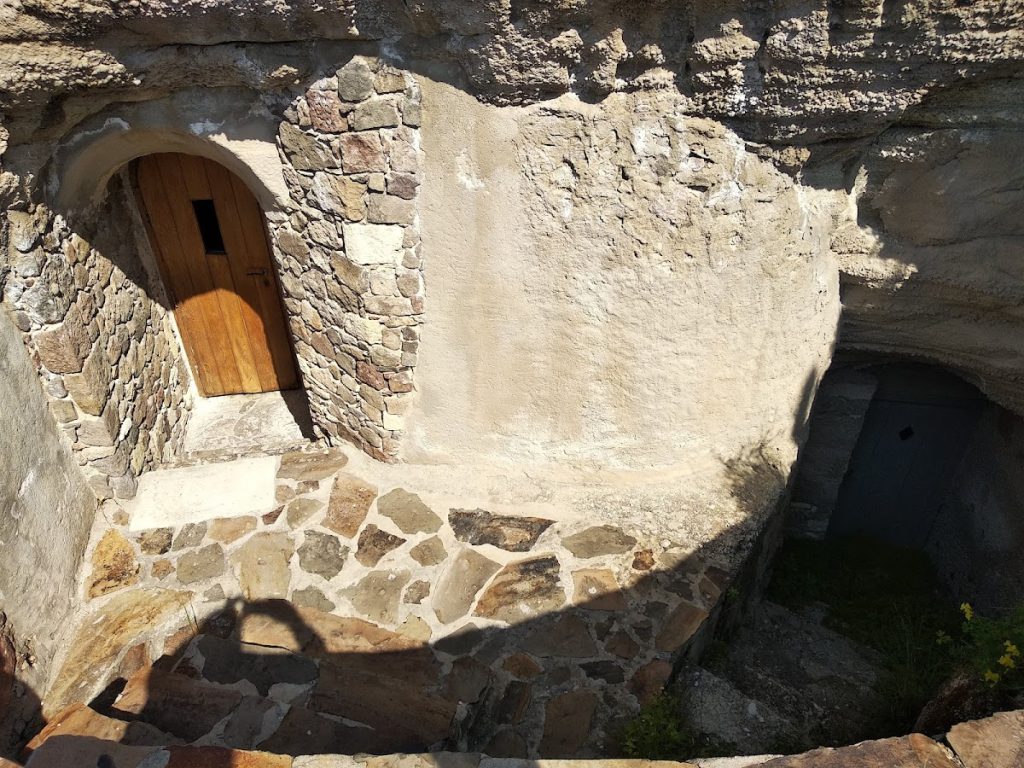
Catacombs of Milos
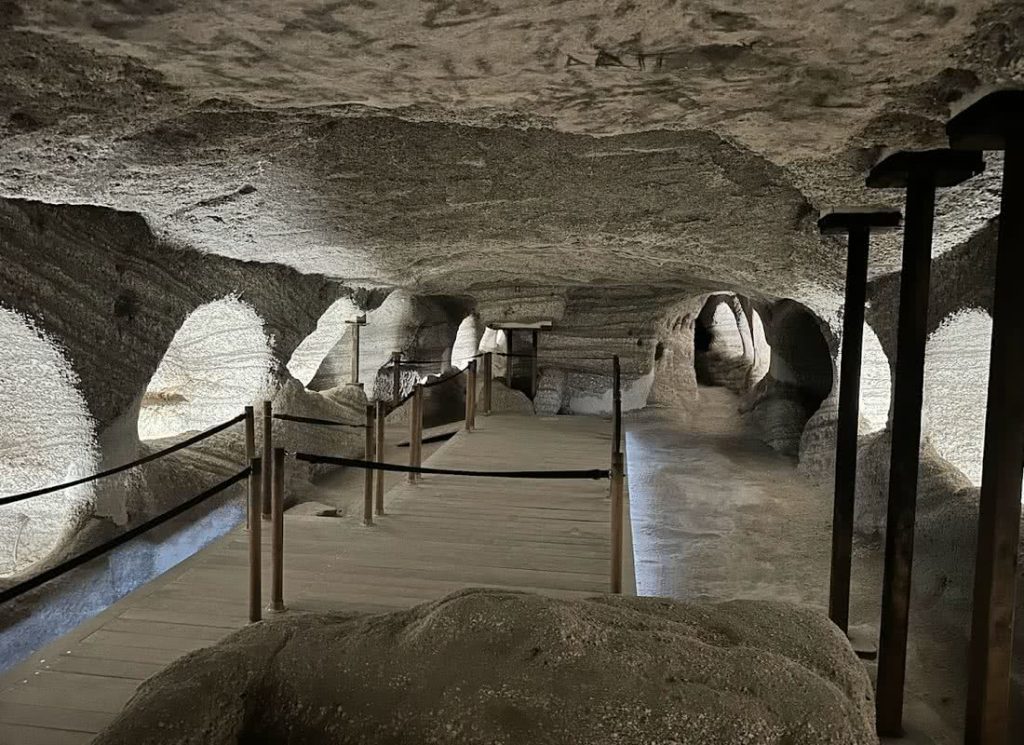
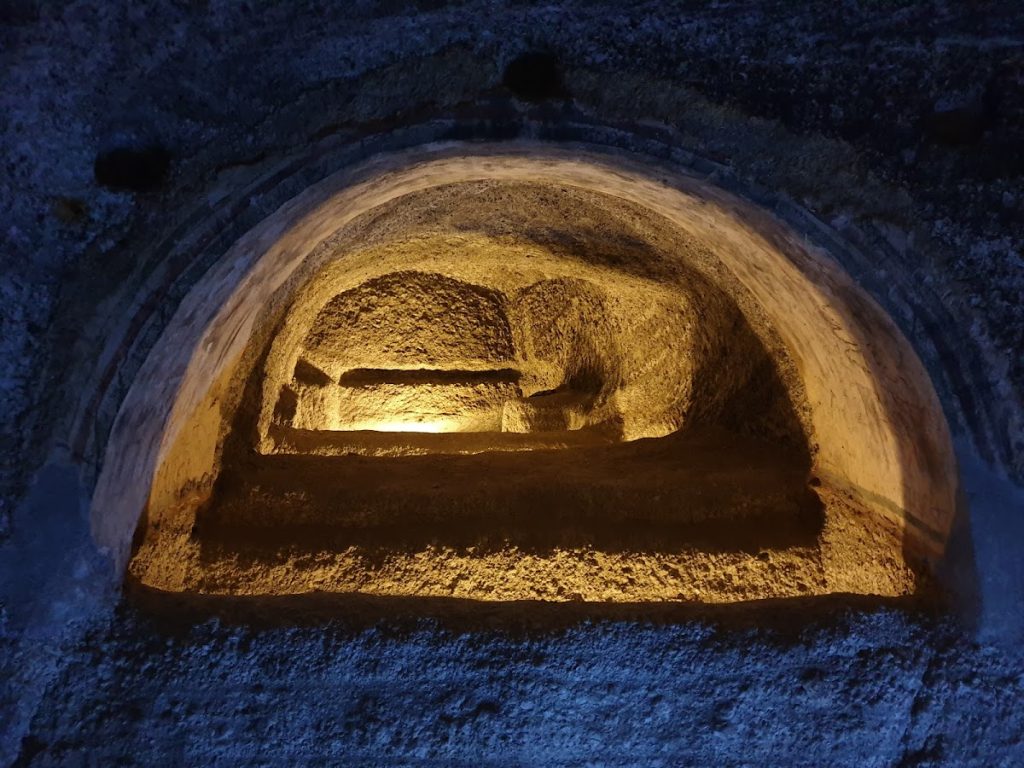
Milos Catacombs are one of the most important archeological findings of Milos is the famous catacombs. These catacombs were found in 1844 and it is estimated that they were built towards the end of the 1st century. They were used as Christian cemeteries during Roman times. The catacombs are three in total and they are found underground. They are interconnected as they have hallways that decrease in height as you reach the death chamber. The hallways are typically about 200 meters in length with 5 to 7 carved graves on each side of the hallway.
Ancient theatre of Tripiti
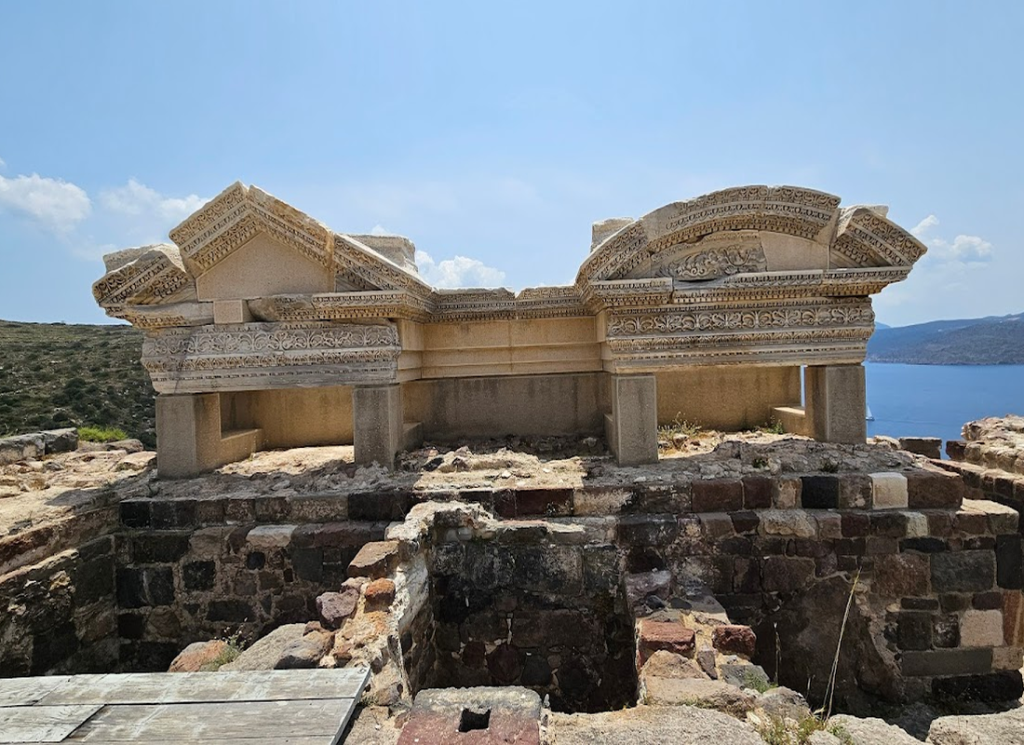
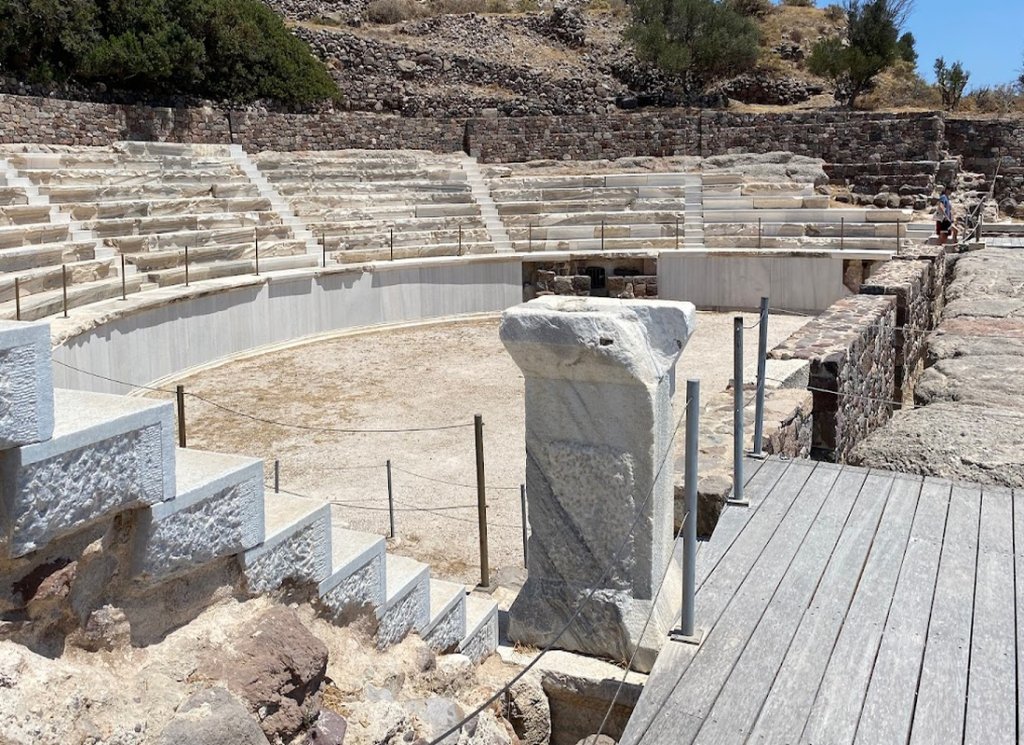
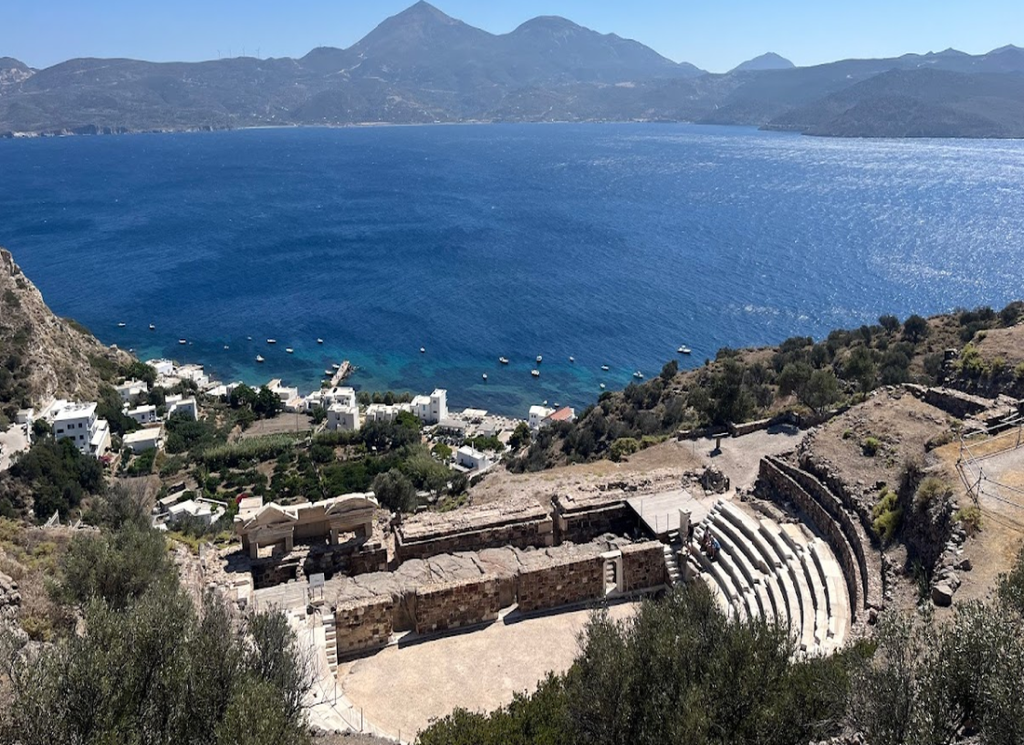
Situated on a slope below the picturesque village of Tripiti, the Ancient Theater of Milos is a well-preserved open-air marble theater, despite being slightly ruined throughout the years since it was first built during the Hellenistic period. It boasts a fantastic sight, as along with the theater and the nearby historic catacombs, you are also offered fantastic views towards the Aegean Sea and the harbor of Klima village.
Milos Archaeological Museum
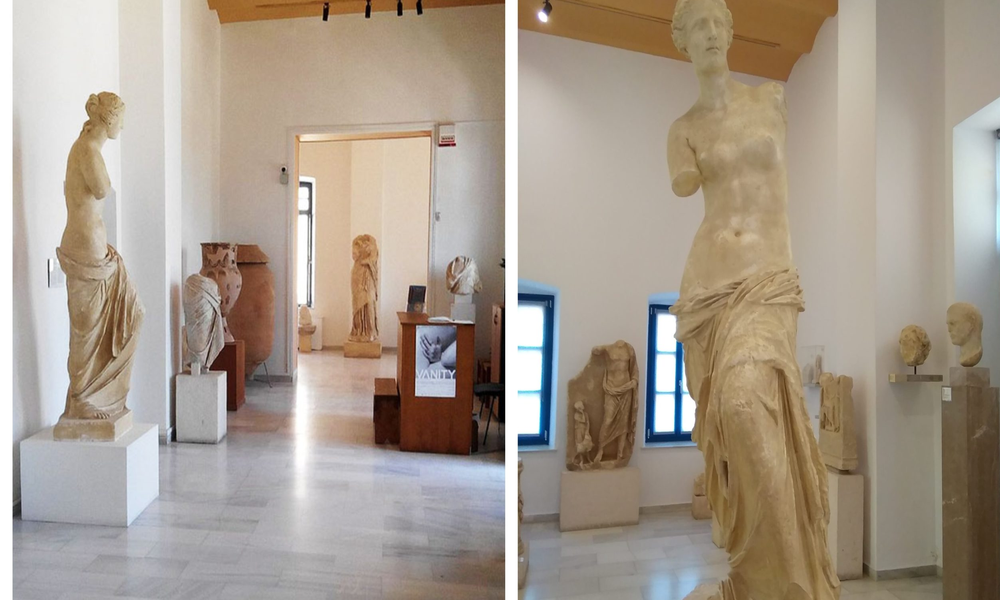
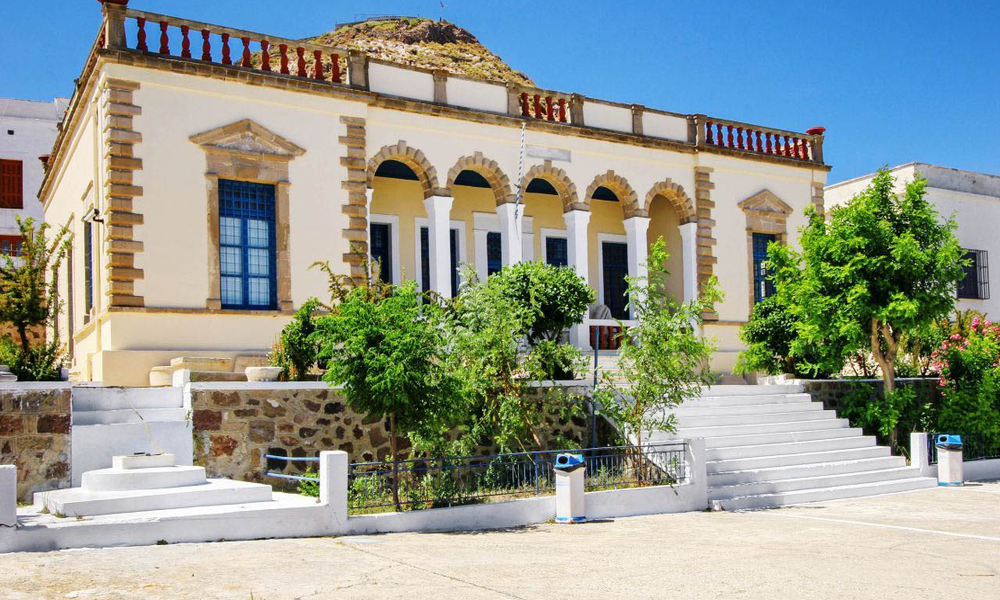
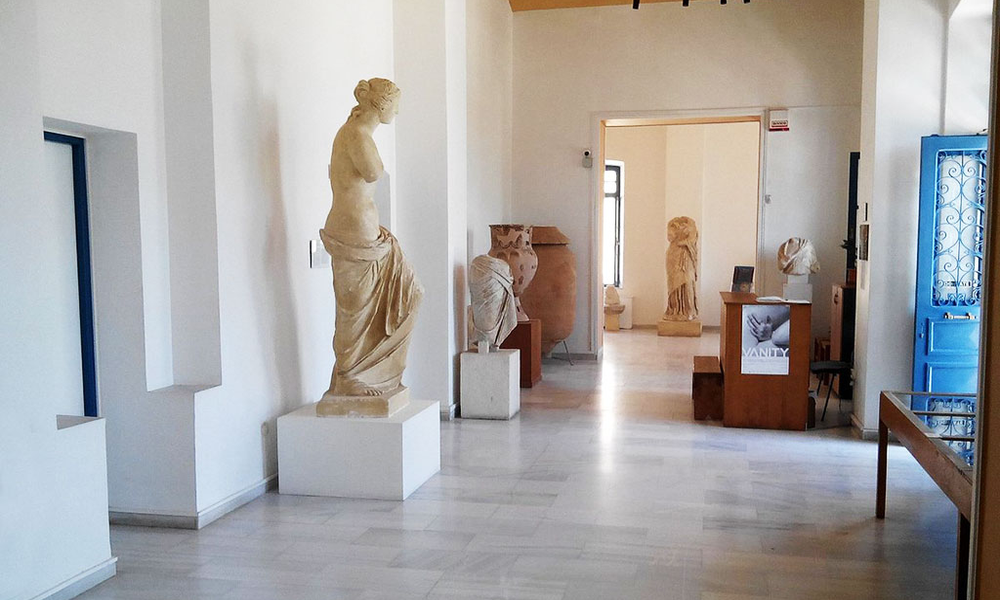
In the island’s capital,Plaka, lies the Archaeological Museum of Milos. It is housed in a Neoclassical building built in the 1870s and it was designed by the famous german architect E. Ziller. After several renovations, it opened as a museum in 1985. At the entrance of this building, guests can admire a replica of the famous Venus de Milo.The Venus de Milo statue was originally found on the island by a local in 1870 and is currently exhibited at the Louvre Museum in Paris.
Folk Museum
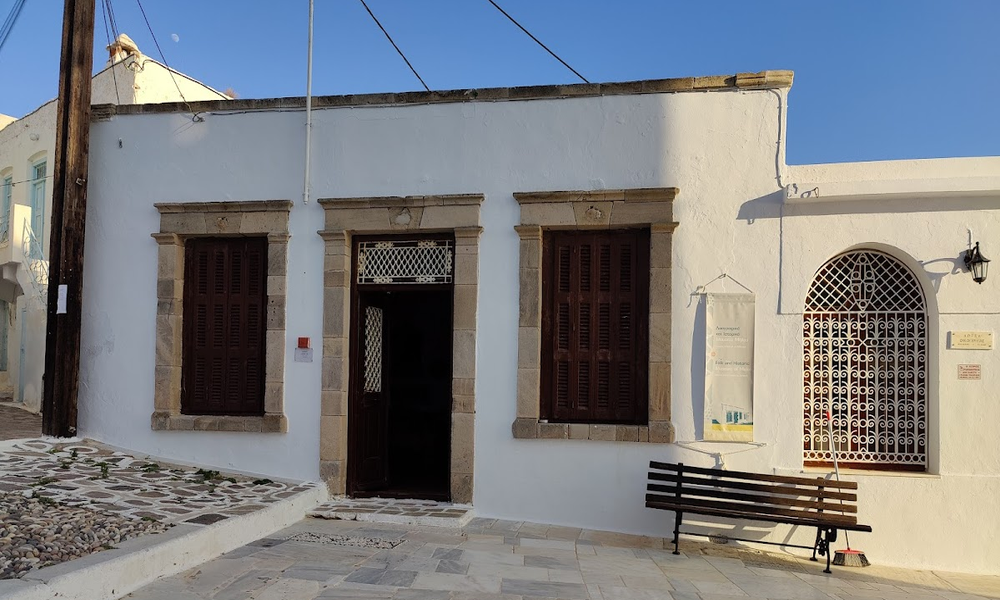
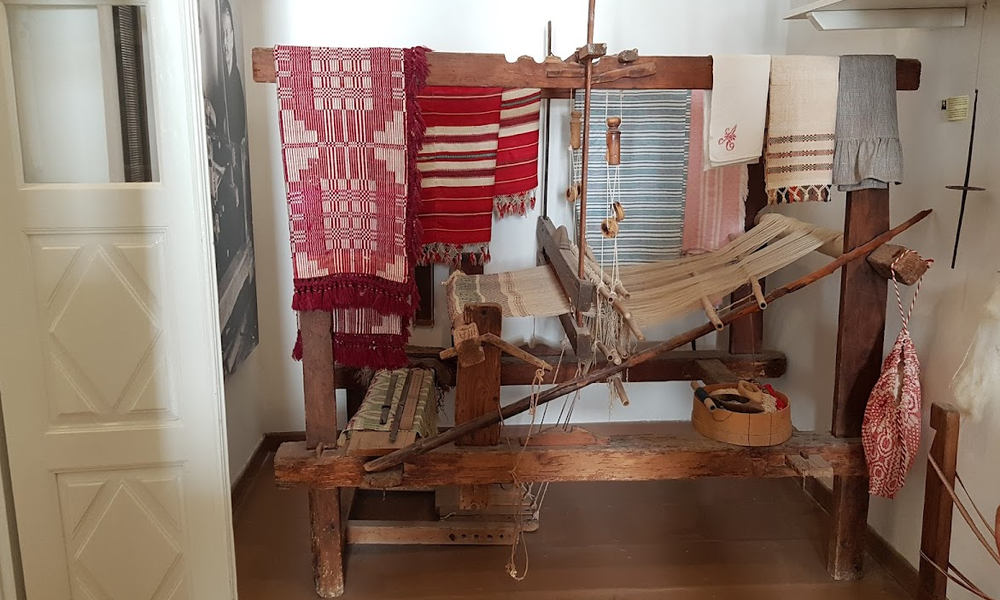
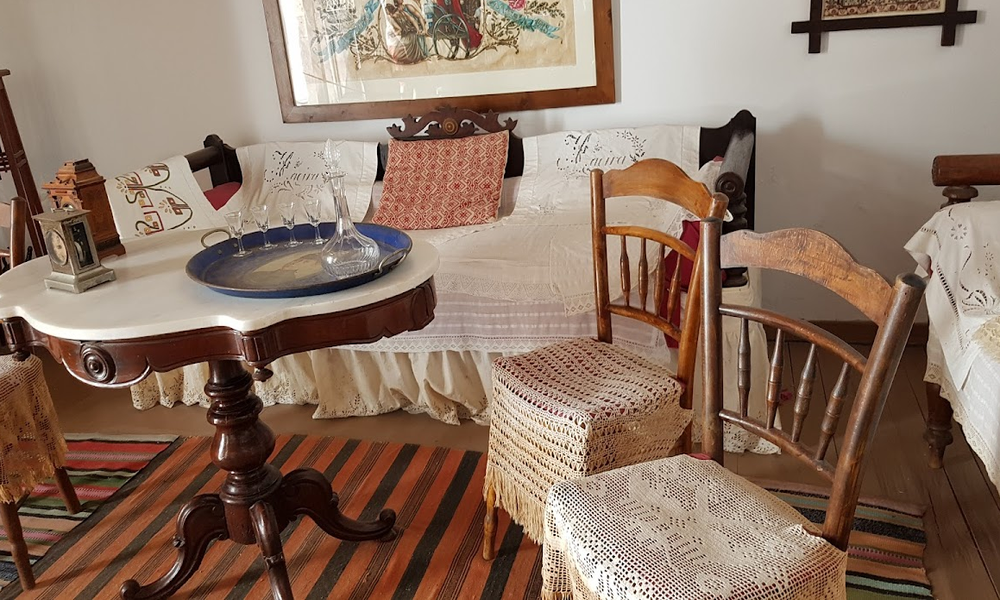
The History and Folklore Museum of Milos is housed in a 200-year-old house located in the courtyard of the church of Panagia Korfiatissa, on a hill in Plaka.This small museum has few rooms but interesting exhibits that depict daily life on Milos island from the 17th century up until a few decades ago.
Klima traditional fishing village
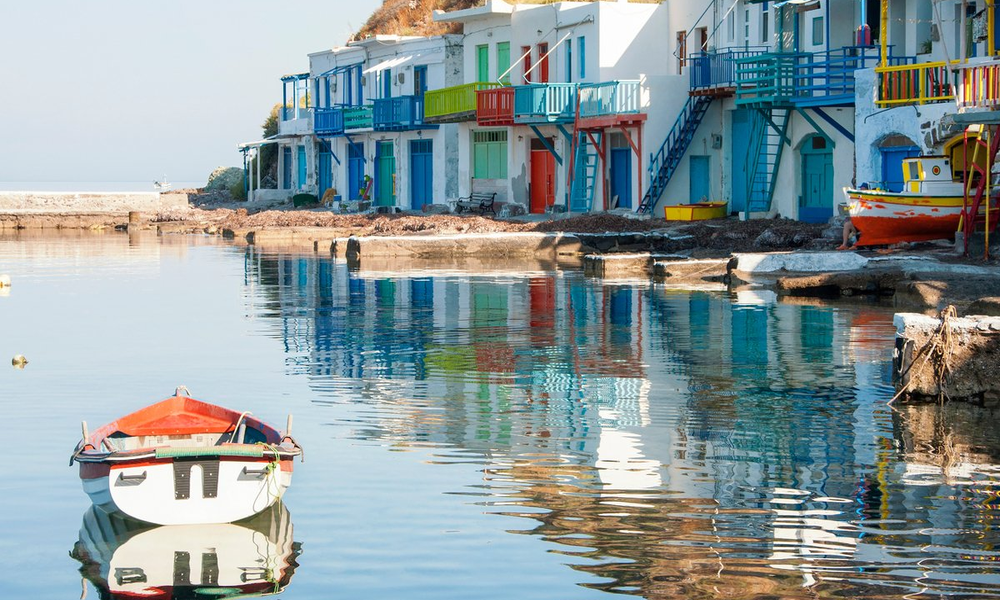
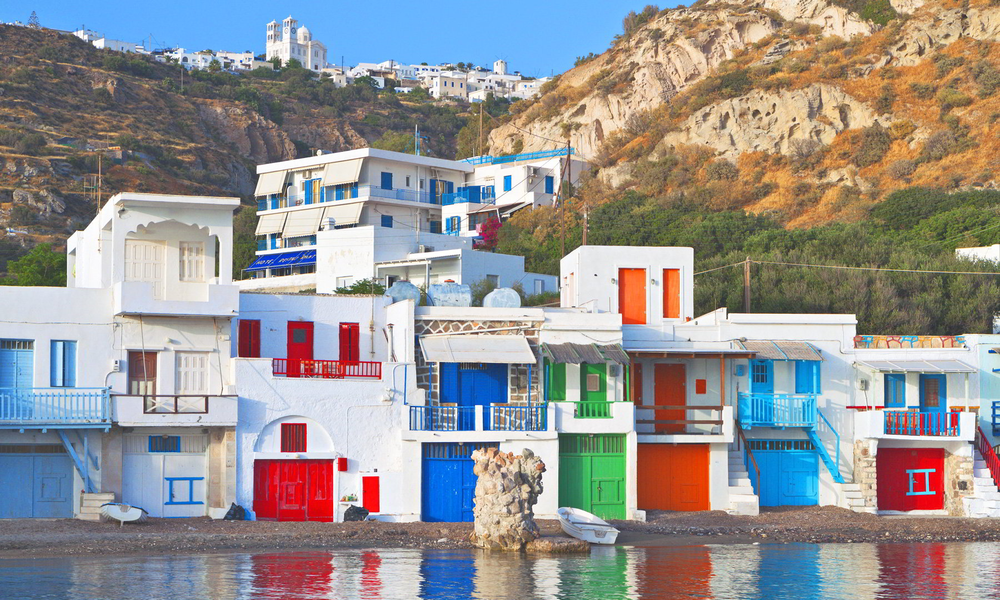
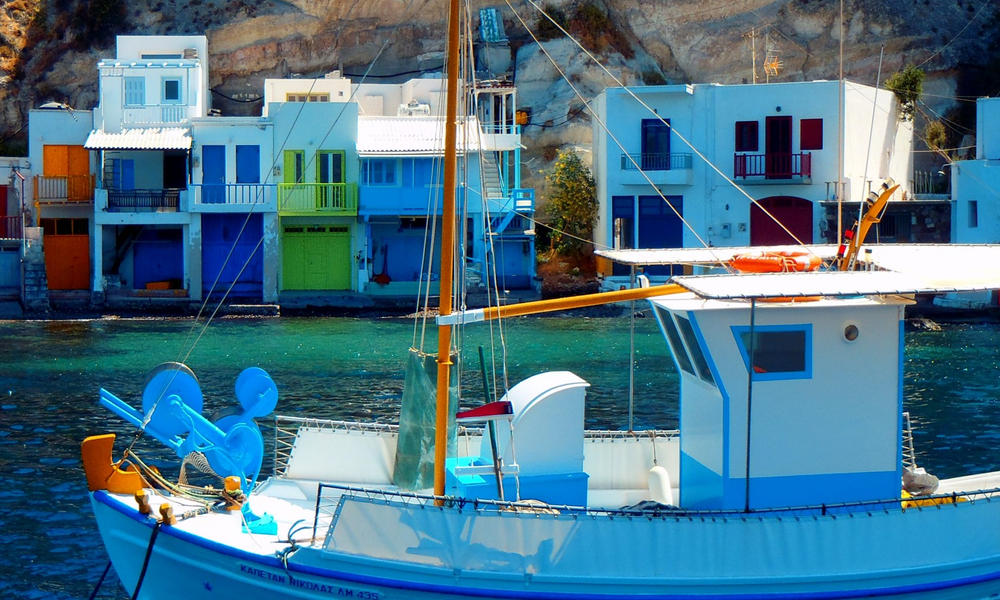
Klima is a traditional fishing village with very few inhabitants and multicolored two-storeyed houses in the natural concavities of the rocks. On the ground floor, in the so-called ‘’syrmata’’ the fishermen’s boats were kept, whereas the families used to live on the top floor.
Adamas (Port)
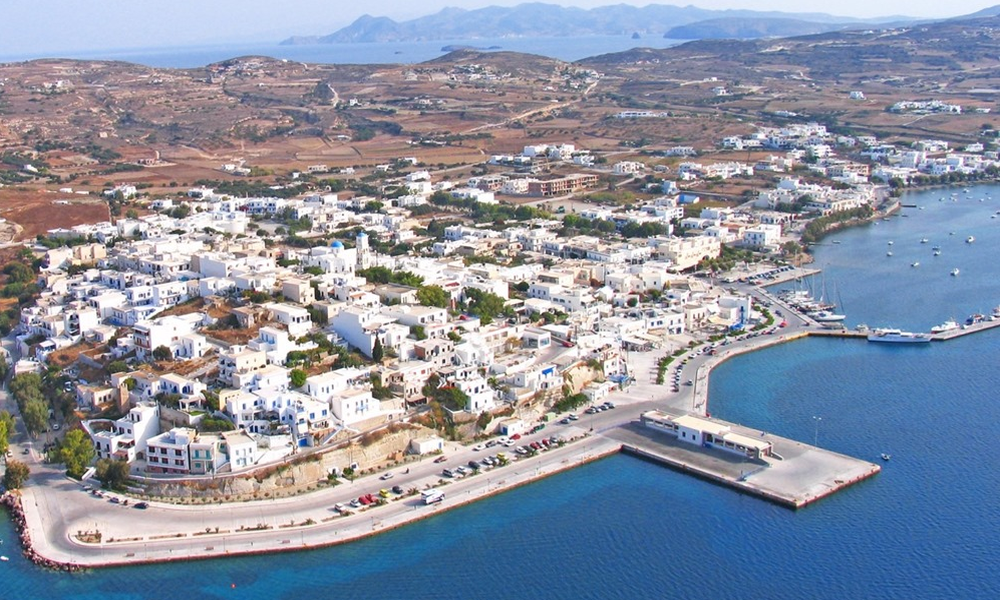
Adamas in Milos is the island’s main port, as well as one of its largest settlements, with over 1300 permanent inhabitants. Situated on the northeast side of Milos Bay and lies 5 km away from Plaka, which is the capital town. It showcases the traditional Cycladic architecture with whitewashed houses reflecting on the shimmering waters of the Aegean Sea.
The village was founded in 1835 by refugees arrived from Crete, who arrived after a failed rebellion against the Ottomans. The town was constructed on top of the remnants of an ancient settlement that collapsed hundreds of years ago. Ruins of these buildings can still be seen on the beach, proof that the island was inhabited for thousands of years. From these times on, Adamas started growing and became an important cultural and commercial center, thanks to its large and safe natural harbor, as well as its strategic position in the eastern Mediterranean Sea.
Plaka
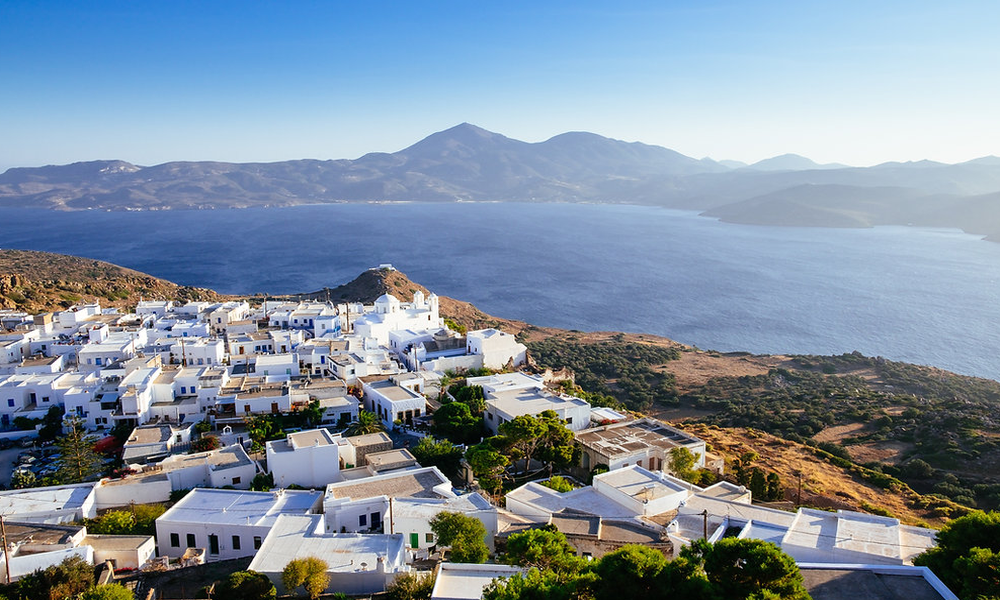
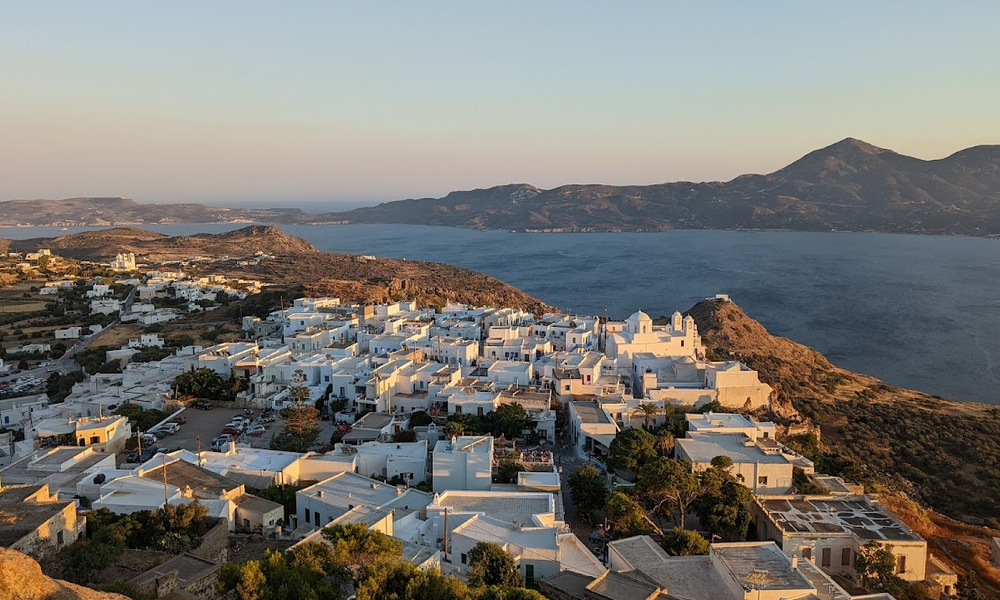
Plaka Village is the capital town of Milos. It is located on the north of the islandand covers the sides of a hill, bordering the villages of Plakes, Triovasalos, Pera Triovasalos and Tripiti.
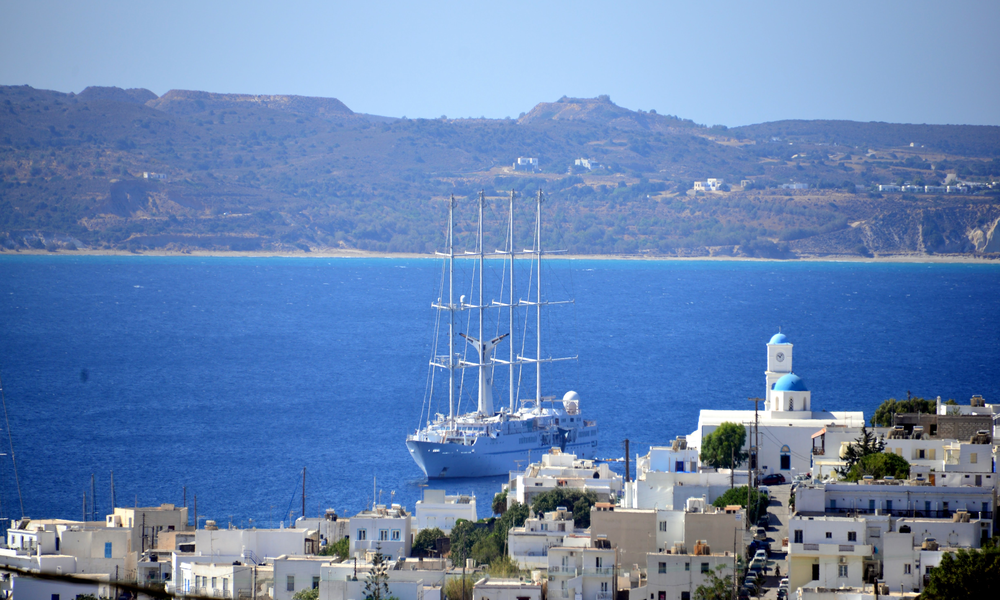
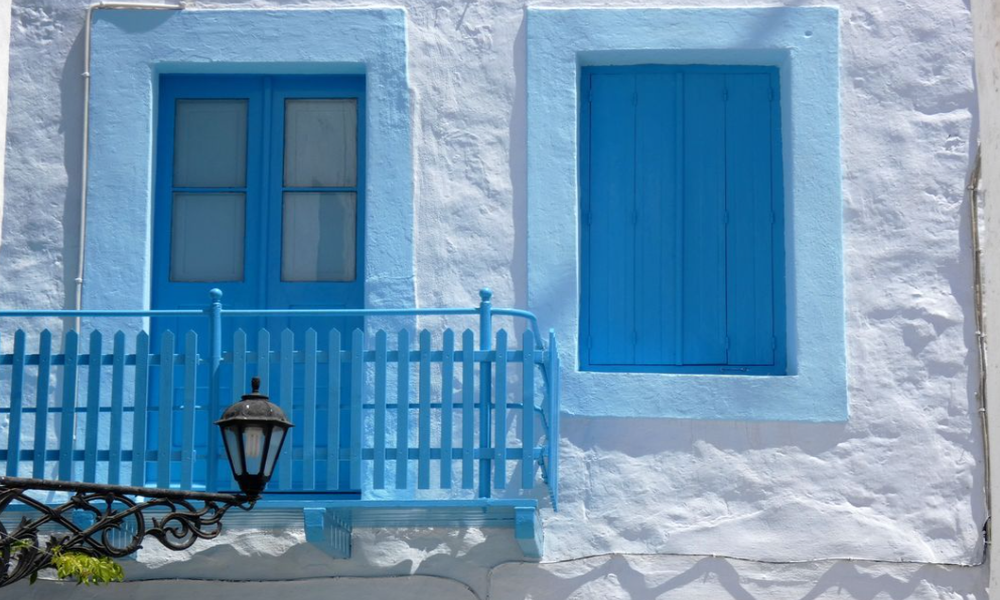
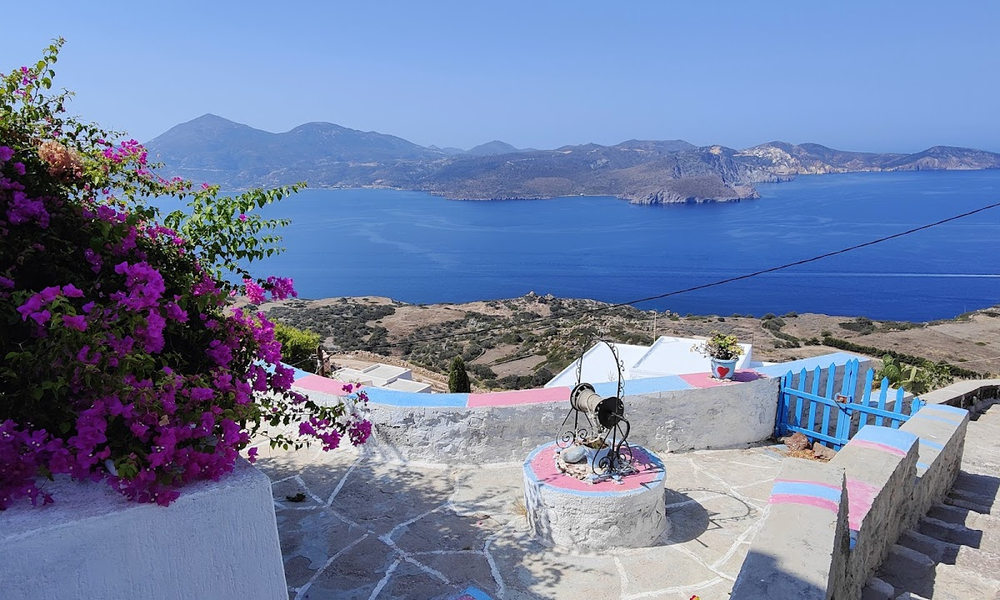
It is one of the most picturesque places to visit on the island, with traditional Cycladic architecture. Its narrow alleys are full of whitewashed houses with brightly painted windows and balconies that are decorated with bougainvillea flowers. It is divided into the Old Town (Venetian Castle) and the New Town. You will discover restaurants, cafes, bars and shops, as well as charming churches and a few museums across them.
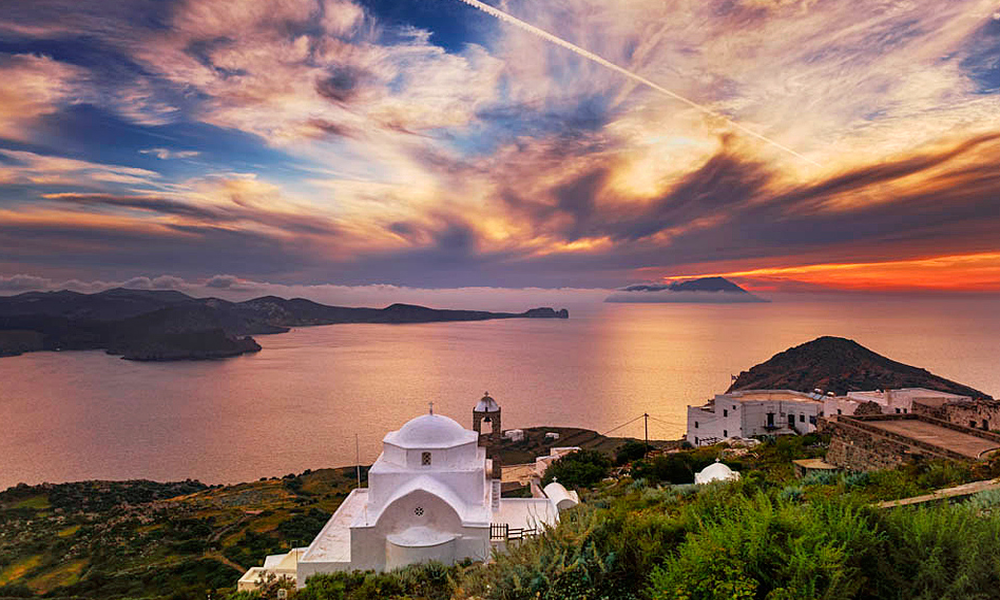
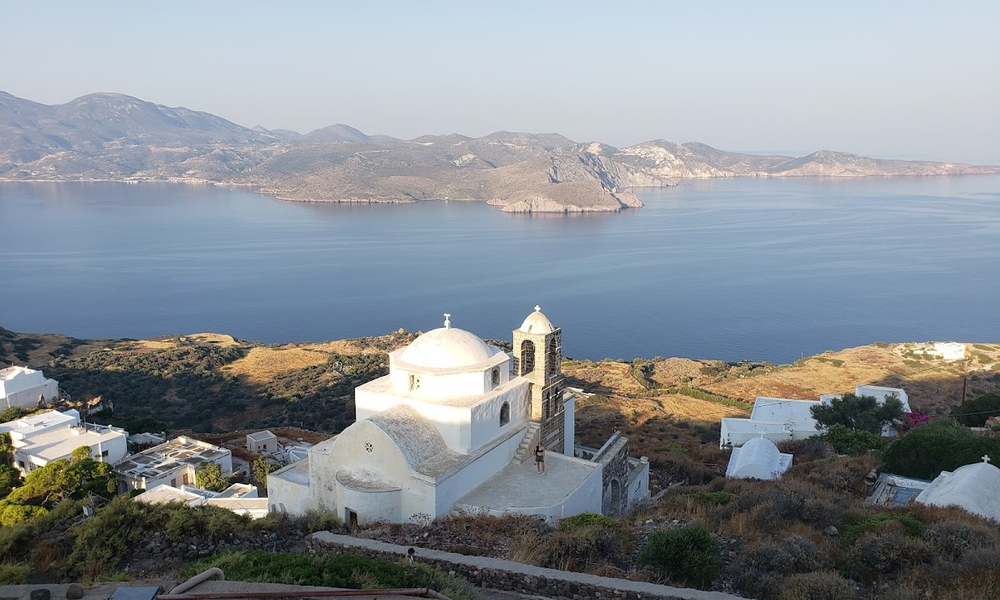
From Plaka, one can enjoy a magnificent view of the Gulf of Milos and, with a location like that, it comes as no surprise that the town has become famous for its sunset views.
Plaka Castle (Venetian Castle of Milos)
The Castle was built in the 13th century on the hill of Prophitis Ilias, on the northwest edge of the island (today’s Plaka). Visitors can admire a view of incomparable beauty of the entire island bay and of the magic sunset that is worth enjoying when you decide to climb all the way to the top. Also, ascending to the Castle, visitors will have the chance to see the church of The Assumption of the Virgin Mary or Panaghia Skiniotissa and the church of Panaghia Thalassitra.
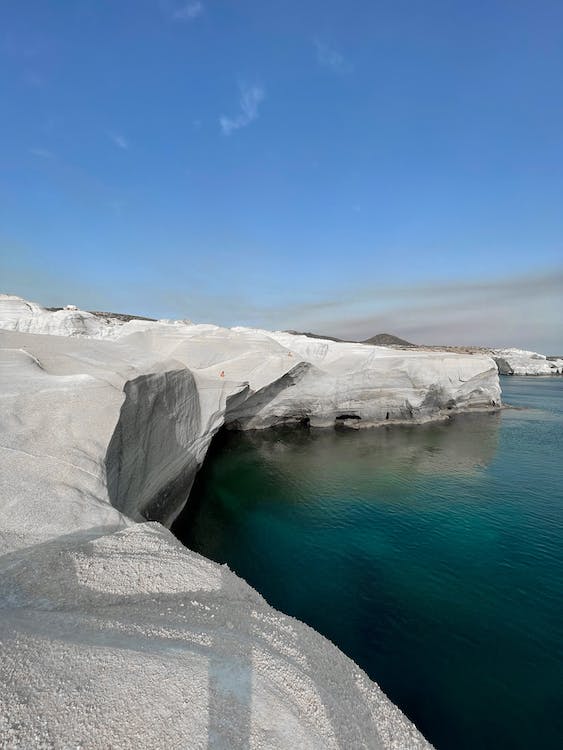
Sarakiniko beach
Kleftiko
Milos Best beaches
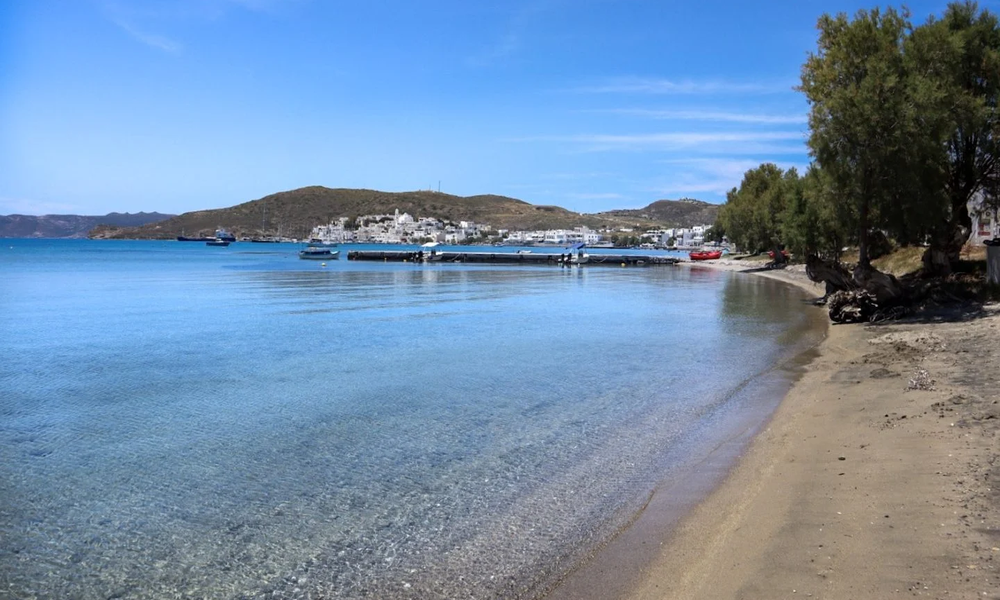
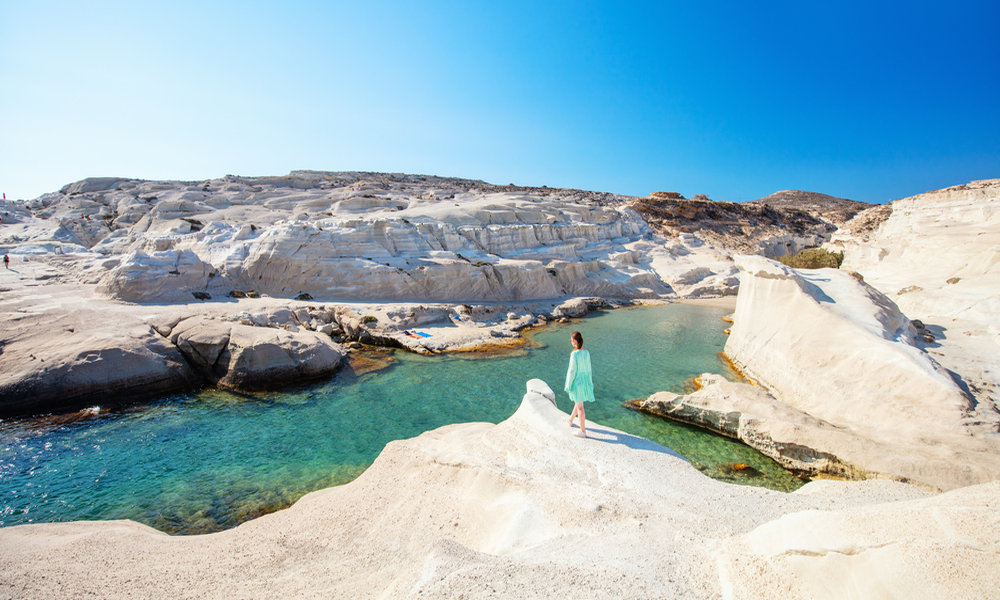
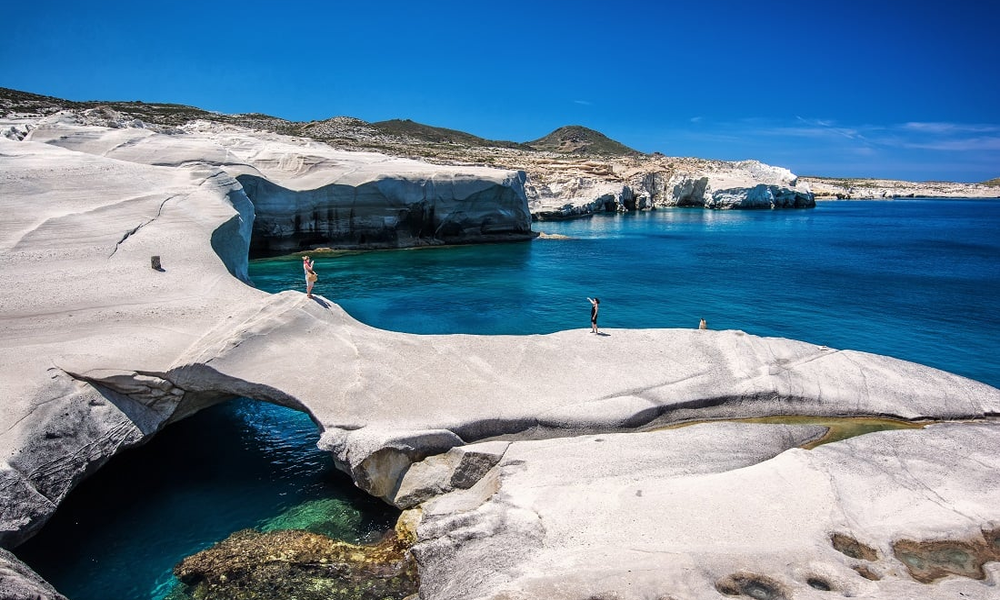
Milos is blessed with some of the best beaches in Greece. If the volcanic geological forms of Milos are interesting, the variety and colors of its beaches are impressive: the seawaters show all shades of blue, of green, and other combinations of both colors.Milos beaches can be sandy, stoned or with perlite, a light sand of which the island is a major world producer. Seawaters are always clear and transparent.
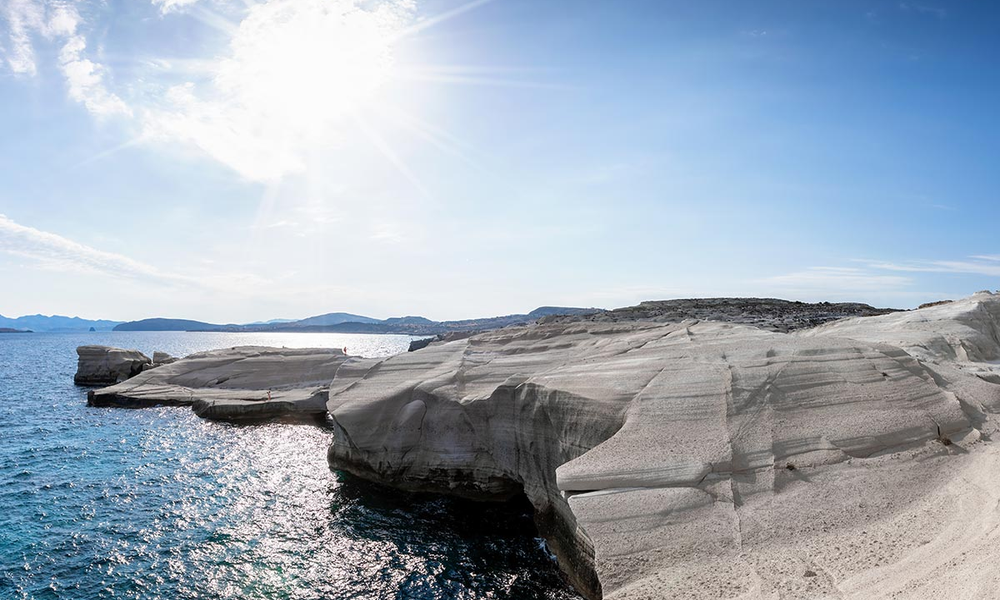
Milos’s characteristic coast, 120 km. long, is full of large and tiny unique beaches created by erosion of the various volcanic material forming the island: see Sarakiniko, Agios Konstantinos, Papafragas, Kapros, Provatas and dozens of unnamed others. They are all different!
Most of the beaches can be reached by well-paved roads, dozens of others, like Kleftiko, can be reached only from the sea, with excursion boats.
Sarakino (east)
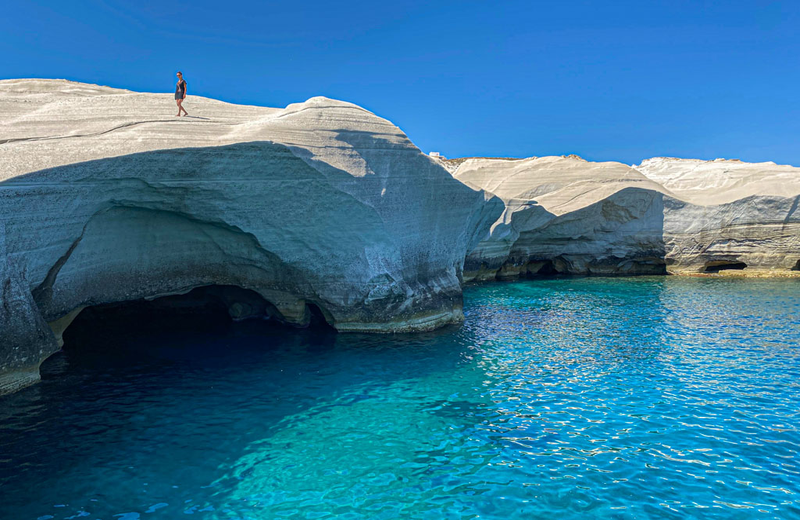
Tsigrado (east)
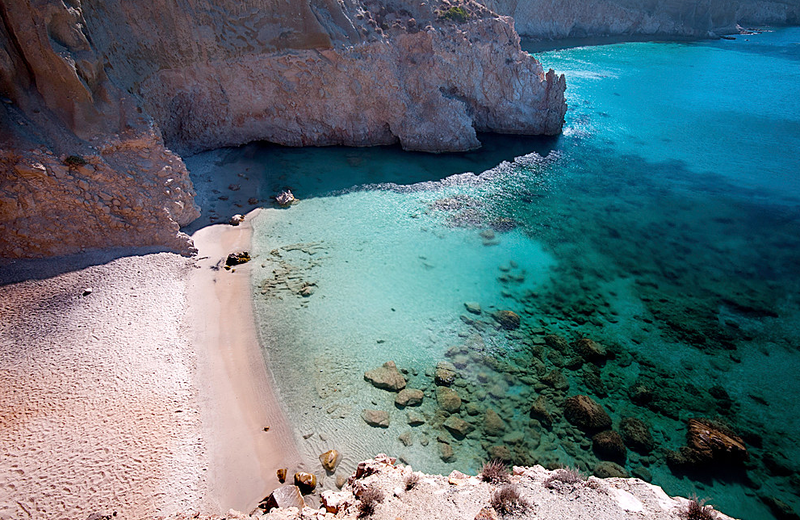
Palaiochori (southeast)
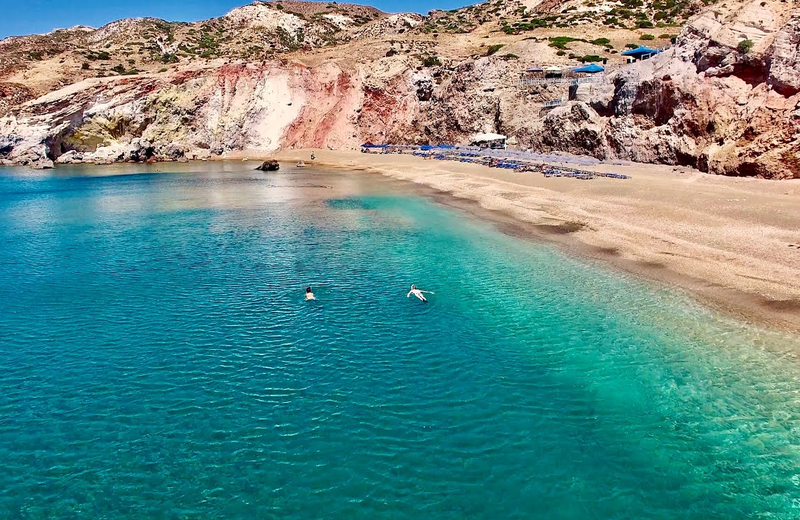
Agia Kyriaki (southeast)
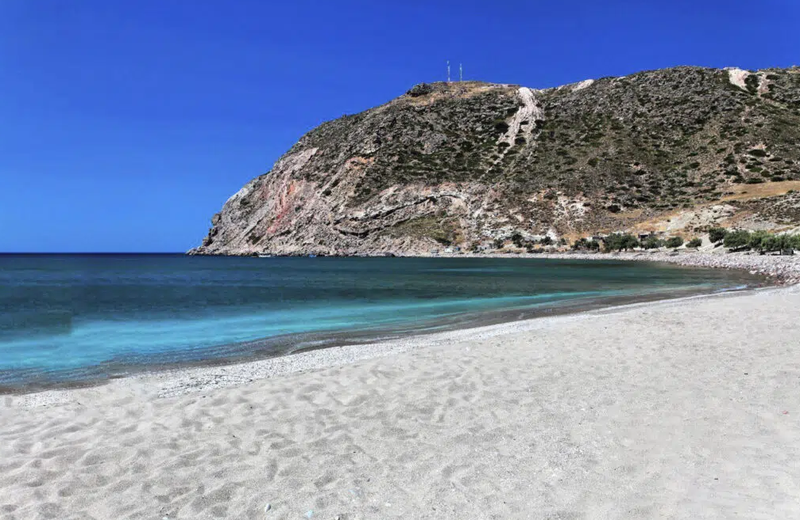
Provatas (southeast)
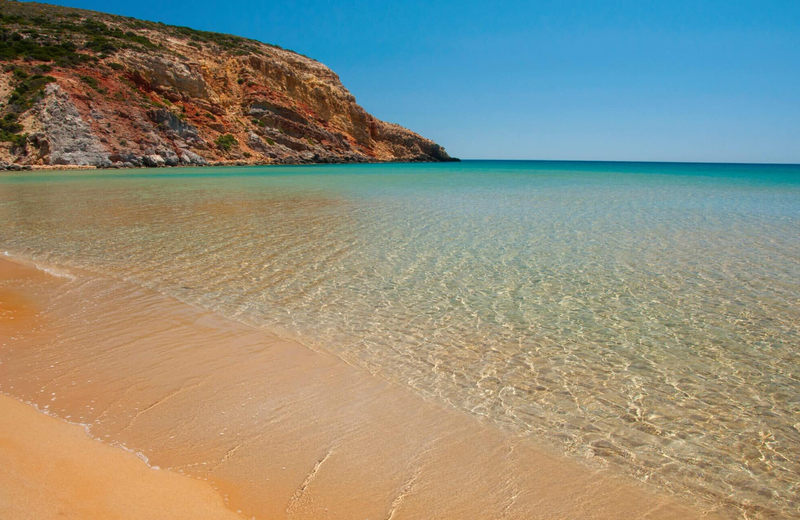
Achivadolimni (southeast)
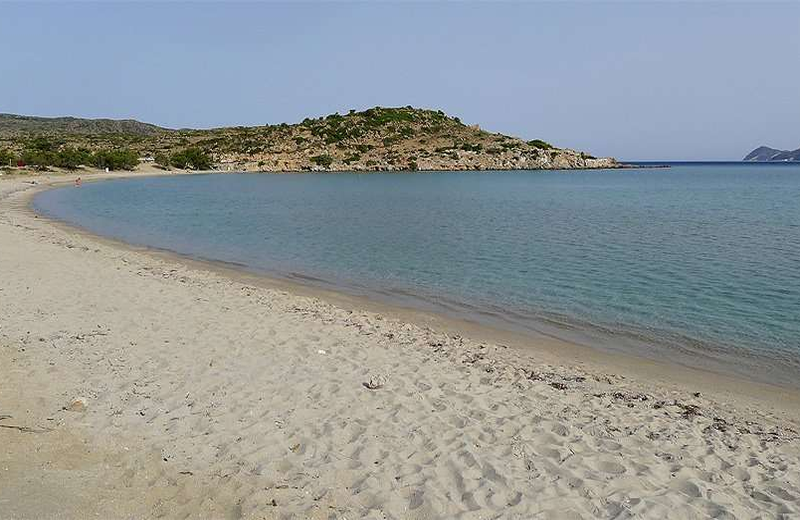
Plathiena (north)
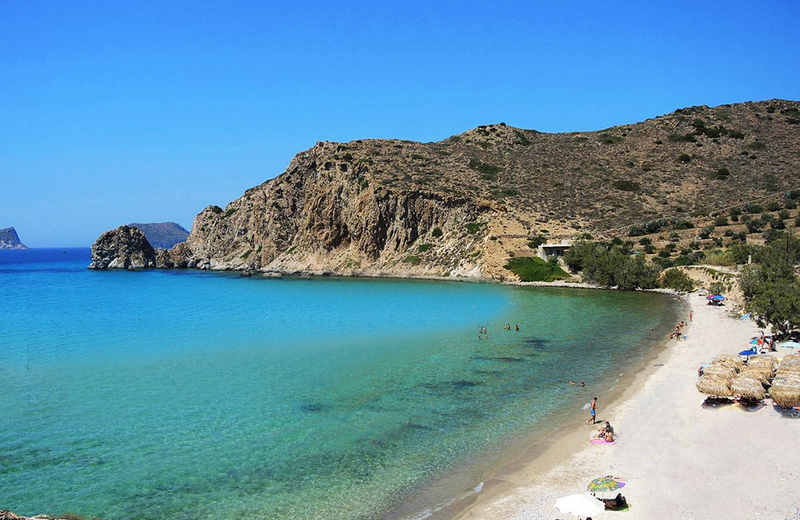
Philopotamos (north)
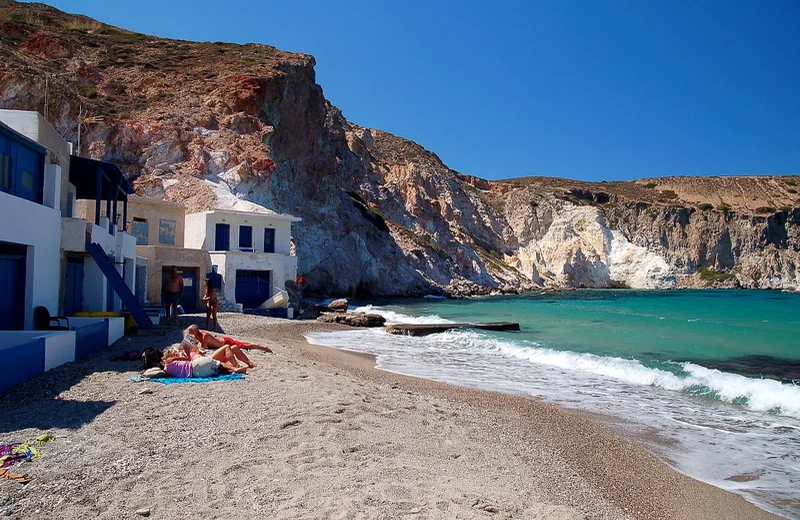
Pollonia (north)